GRI 306: Waste 2020 is the standard most manufacturing sustainability teams are working against when they build waste disclosures for annual reports, CDP responses, and CSRD-aligned reporting packages. The standard is well-structured in principle. Applying it to a stamping plant, a metal fabrication facility, or a plastics extruder is more involved than the standard's own guidance suggests — particularly for manufacturers who have not historically tracked waste at the field level required by GRI 306's disclosure structure.
This is a field guide, not a policy summary. It assumes you're familiar with what GRI 306 requires and are trying to figure out what your production records need to look like to support a compliant disclosure.
What GRI 306 Requires That Manufacturers Actually Struggle With
GRI 306 requires disclosure of waste generation by type and disposal method. The disclosure structure includes:
- GRI 306-2: Management of significant waste-related impacts
- GRI 306-3: Waste generated — total weight by type (hazardous/non-hazardous), by disposal method (recycling, composting, recovery, incineration, landfill), and by treatment destination (on-site vs off-site)
- GRI 306-4: Waste diverted from disposal — weight by recovery method (preparation for reuse, recycling, other recovery), on-site and off-site split
- GRI 306-5: Waste directed to disposal — weight by method, on-site and off-site
The structure is logical. The challenge for discrete manufacturers is that their internal records were built to support production management and regulatory compliance (RCRA, state solid waste permits), not GRI 306 disclosure categories. The mapping from "what your facility actually tracks" to "what GRI 306 wants disclosed" requires a translation exercise that usually reveals documentation gaps.
The Translation Problem: From Production Records to GRI Categories
A metal stamping facility's waste streams typically include: steel and aluminum scrap (sold to recycler), cutting fluid waste (managed as hazardous or special waste), packaging waste (cardboard, dunnage), reject parts (either reprocessed internally or sold as scrap), and general facility waste (non-production). Each of these maps to GRI 306 categories differently.
Steel and aluminum scrap sold to a recycler maps to GRI 306-4 as non-hazardous waste diverted from disposal via recycling, off-site. The disclosure should show the weight by material type. If you have weighbridge records and recycler certificates, this is straightforward to populate. If you're working from estimated weights or aggregated recycler invoices, the disclosure is harder to defend at the specificity GRI 306 expects.
Cutting fluid waste — depending on water content, additives, and metal particulates — may classify as hazardous waste under RCRA. Under GRI 306-3, it discloses separately from non-hazardous waste. Its disposal pathway (reclamation for reuse, incineration, permitted disposal) appears in GRI 306-4 or 306-5 depending on whether it's recovered or directed to disposal. Manufacturers sometimes undercount hazardous waste generation in GRI disclosures because internal records for RCRA manifests are managed by EHS separately from the sustainability team doing the GRI disclosure. Reconciling the two is a process coordination issue, not a data issue.
Waste Characterization: The GRI Requirement Manufacturers Underinvest In
GRI 306-3 requires waste characterization — understanding what your waste streams actually contain, not just how much you generated. For post-industrial scrap, characterization is relatively simple: steel scrap is steel scrap, and your recycler can confirm grade composition. For mixed waste streams — refuse from break rooms, floor sweepings, packaging debris — characterization requires either waste composition analysis or a documented sampling methodology.
Most manufacturers have not done formal waste characterization for their non-production waste streams. They know roughly how many dumpster pickups they have per month and approximately what goes in them. GRI 306 doesn't require perfection — it allows for estimation with documented methodology. But the methodology needs to be documented and applied consistently across reporting periods.
A useful minimum: waste stream characterization should identify each significant waste stream (defined as streams accounting for more than some minimum percentage of total facility waste generation — 5% is a common threshold), document the disposal pathway for each stream, and note where weight data comes from measured sources versus estimates. This documentation is the foundation of a GRI 306-3 disclosure that holds up under external verification.
The On-Site vs Off-Site Distinction and Why It Catches Manufacturers Off Guard
GRI 306 requires disclosure of whether waste treatment occurs on-site or off-site. For most discrete manufacturers, almost all waste treatment is off-site — scrap goes to recyclers, hazardous waste goes to licensed disposal facilities, general waste goes to municipal waste haulers. On-site treatment (shredding, compacting, internal reprocessing of rejected parts) needs to be noted separately.
Where manufacturers get caught is with internal scrap reprocessing. If a stamping plant reworks rejected parts back into the production stream — restriking, trimming, re-forming — that material doesn't leave the facility as waste. It re-enters production. Under GRI 306, this is not waste diversion; it's waste that was never generated as waste. But if your production records don't clearly distinguish between parts that go to rework and parts that go to external scrap, your waste generation totals may be overstated (rework parts counted as scrap generated, then also counted as diverted).
This isn't an obscure scenario. Any high-volume stamping or plastics molding operation with meaningful first-pass yield rates has an internal rework loop. Making sure that loop is correctly excluded from waste generation accounting is a data reconciliation task that needs to happen before GRI 306-3 gets populated.
Supporting Documentation for External Verification
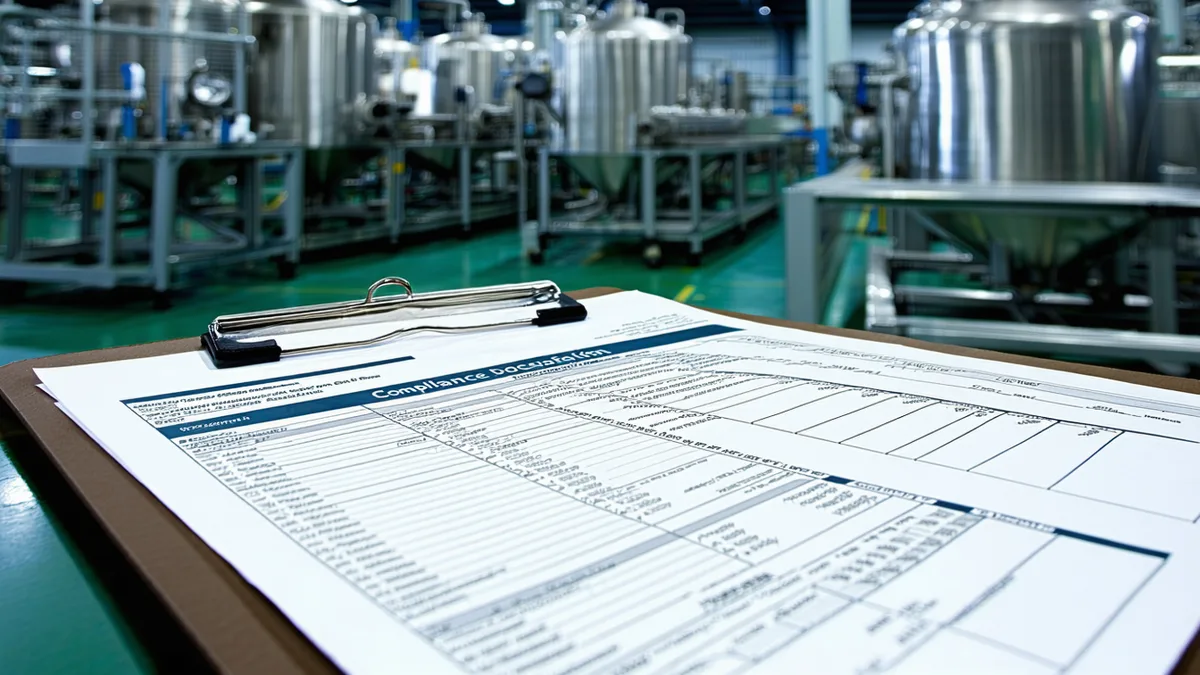
GRI reporting is moving toward external verification — particularly for companies subject to CSRD, which requires limited assurance on sustainability disclosures. For waste data, external assurance means a verifier will ask to see the underlying documentation for the figures you've disclosed.
The documentation package for a defensible GRI 306 disclosure should include:
- Recycler certificates or invoices for all recycling-pathway waste, cross-referenced to the GRI 306-4 weight figures
- RCRA manifests or equivalent documentation for hazardous waste streams
- Waste hauler invoices or pickup records for general facility waste, with weight estimates and estimation methodology noted
- Internal records for any on-site treatment or reprocessing, clearly separated from external disposal pathways
- Waste characterization methodology note explaining the basis for waste type classifications
We're not saying every manufacturer needs a formal third-party waste audit before filing a GRI 306 disclosure. We're saying that the documentation underlying the disclosure should be assembled in a form where it could be reviewed by an external verifier, because for companies in CSRD scope or with major customers requesting verified disclosures, that verification request is likely coming.
The Scale Question: When MES Data Is and Isn't Sufficient
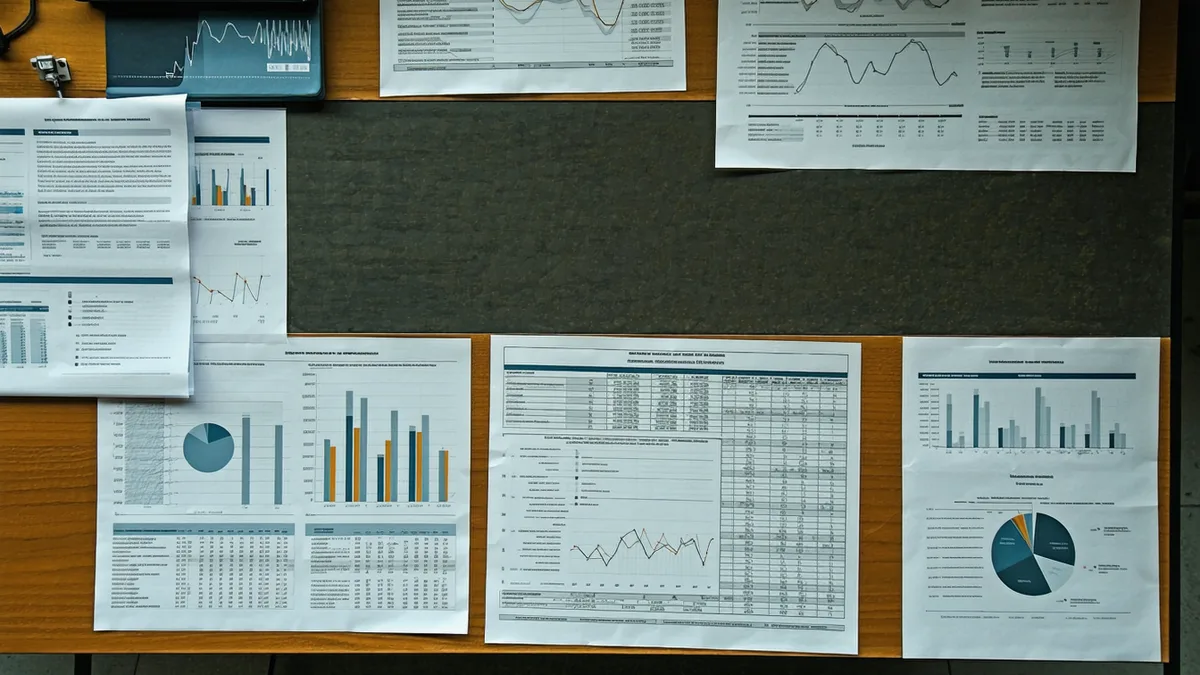
Production MES systems often have waste or scrap generation fields. These fields are typically populated from production reporting — operators or supervisors logging scrap quantities at end of shift or end of order. This data is useful for production management. It isn't the same as a scale-captured weight, and the distinction matters for GRI disclosure.
MES-reported scrap generation will often differ from recycler-received weights by a percentage that varies with material, container handling, and operator reporting practices. For a GRI 306 disclosure, you need to decide which figure to use as the denominator — and to document why you chose it and what the variance between MES and recycler receipts is. A disclosure that uses MES-reported generation figures with a note explaining the methodology and the reconciliation basis is defensible. One that uses MES figures without acknowledging the potential variance from scale-captured weights is not, particularly if external verifiers ask for reconciliation.
Building scale-bridge capture into your generation tracking closes this gap permanently. It also surfaces process insights — shifts or lines where MES-reported scrap differs systematically from scale-captured weights — that production teams have genuine use for, independent of reporting obligations.